
Navigating government assistance programs can feel overwhelming for families caring for young children. The WIC program provides nutrition and health support for participants.
This guide explains eligibility, documents, appointments, assessments, benefits, and renewal. It also outlines practical steps that can make the application process easier.


What Is the WIC Program and Why Does It Matter?
The WIC program supports eligible pregnant, recently pregnant, or breastfeeding women, infants, and children under five with nutritious foods, nutrition education, breastfeeding support, and referrals. These family health resources support nutrition during important stages of development.
Who Qualifies for WIC Benefits?
Eligibility generally depends on categorical status, residency, income, and nutrition risk requirements. State and local agencies administer WIC, so applicants should confirm details with the agency serving their area.
Basic Eligibility Requirements
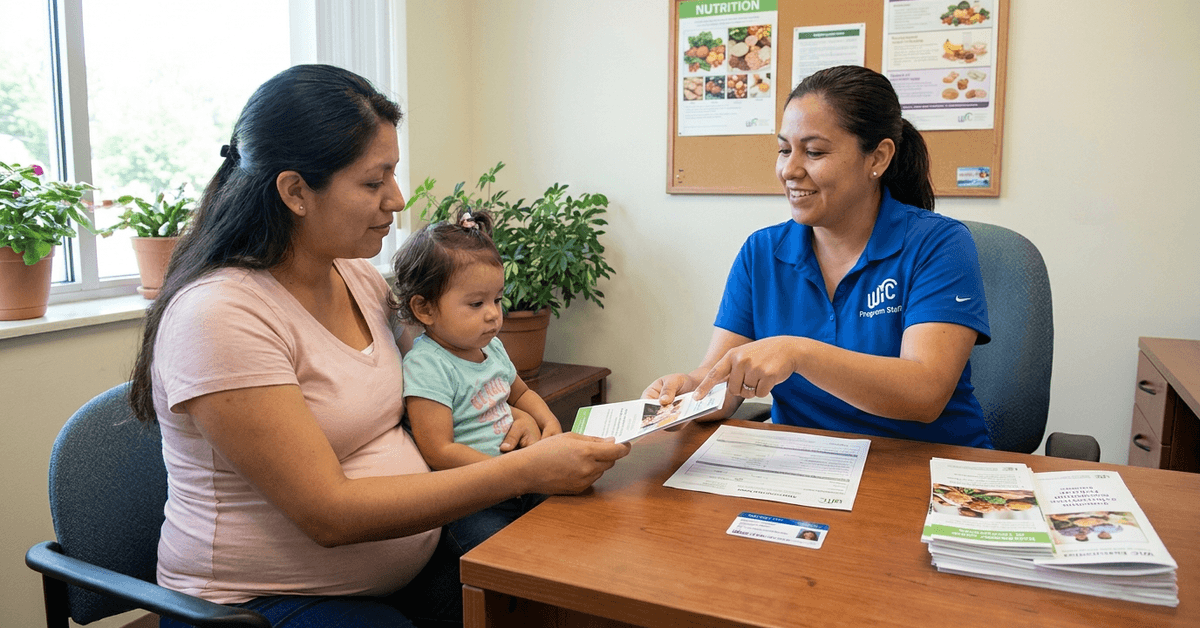
Applicants must meet several core eligibility conditions before certification. Participation in Medicaid, SNAP, or TANF may help establish income eligibility in many cases.
- Residency: Applicants generally apply through a WIC agency serving the state, territory, or area where they live.
- Category: WIC serves eligible pregnant, recently pregnant, or breastfeeding women, infants, and children younger than five.
- Income: Household income must fall within applicable WIC income guidelines, which are updated periodically.
- Nutrition Risk: A qualified professional must determine that the applicant has a nutritional risk during the certification process.
Income limits follow federal guidelines and can change yearly. Applicants should use the current income table or ask their local agency rather than rely on older figures.
How the WIC Application Process Works?
The WIC application usually begins by contacting an agency in the applicant’s area. Local staff arrange the required certification appointment and explain what to prepare.
Step 1: Locating a Local WIC Agency
The first action is to Find Local Clinic information through the USDA WIC locator or a state program website. Applicants can contact the agency by phone or online to begin the process. Local directories connect families with the responsible office.
Step 2: Scheduling an Appointment
After contacting the agency, the next step is to Schedule Appointment arrangements for completing certification.
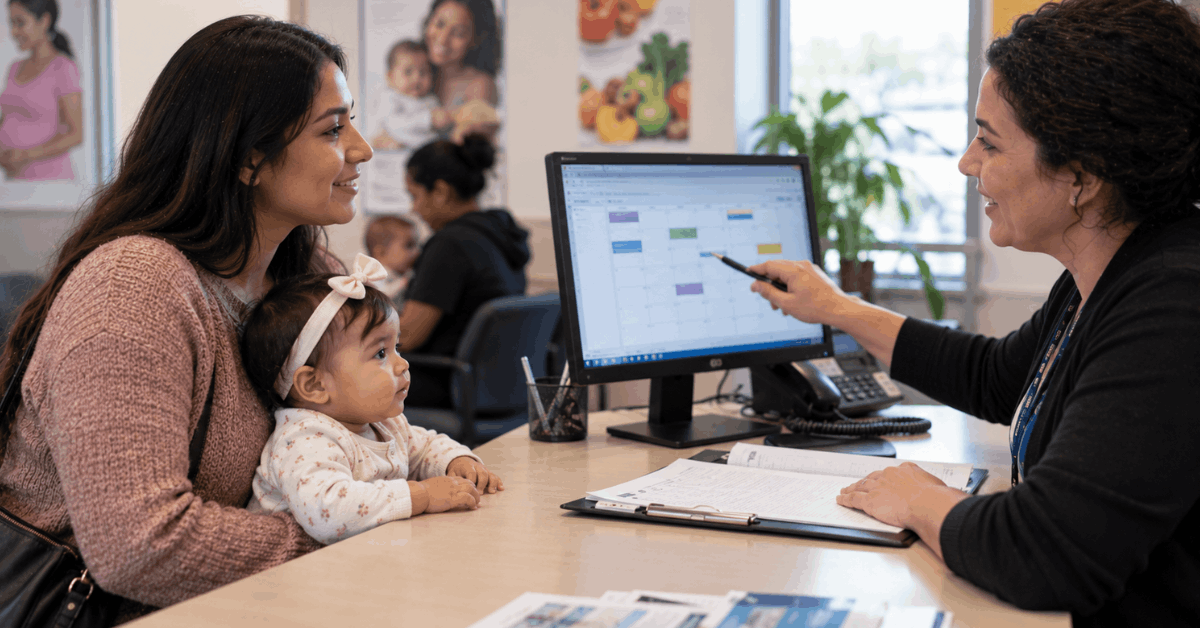
Depending on local procedures, the appointment may be in person or virtual. Staff usually explain who should attend and what documents should be available.
Step 3: Gathering Required Documentation
Applicants should prepare identification, address, and income or program-participation records before the appointment. Having complete documentation ready can reduce follow-up requests.
- Identification for each person enrolling, such as a driver’s license, state ID, passport, birth certificate, or another accepted document
- Proof of current address, such as a recent utility bill or other document accepted by the local agency
- Proof of income, such as recent paychecks, a tax return, or an employer statement when required
- Documentation showing enrollment in Medicaid, SNAP, or TANF when this is being used for income eligibility
- Any additional records the local WIC office specifically requests before the certification appointment
Applicants who cannot locate a requested document should contact the local office rather than assume they cannot continue. Staff can clearly explain acceptable alternatives or next steps locally.
Step 4: The WIC Interview and Assessment
During certification, trained WIC staff review eligibility information and discuss nutrition, health, breastfeeding, or other family needs.
Applicants may need to Complete Health Screening steps used to identify nutritional risk. The assessment helps staff determine eligibility and tailor appropriate nutrition support.
Step 5: Benefit Issuance and Orientation
If approved, participants receive information about using WIC benefits and accessing authorized foods or services.
Many agencies use electronic benefit cards or similar systems for eligible food purchases. Staff also explain benefit periods, approved items, shopping procedures, and available support.
What Happens After Approval?
Approval begins an ongoing relationship with WIC rather than ending the process. Participants generally complete periodic check-ins and recertification so eligibility and nutrition needs can be reviewed.
Re-certification Timeline
Certification periods vary by participant category and individual circumstances. Local WIC staff explain when renewal is required and what information must be updated. Families should respond to reminders so benefits are not interrupted unnecessarily.
Nutrition Education Sessions
Nutrition education is a regular part of WIC participation and may cover healthy eating, feeding children, breastfeeding, or meal planning.
Depending on the agency, education sessions may be offered in person, online, or through other approved methods. These conversations can provide practical guidance tailored to household needs.
Common Challenges and Tips for Success
Paperwork, scheduling, and uncertainty about requirements can make applications feel stressful. Staying in contact with local WIC staff can help families resolve questions before they create delays.
Missed Appointments
If an appointment is missed, applicants should contact the WIC office promptly. Staff can explain rescheduling options and whether additional action is needed. Quick communication can help reduce delays in completing certification.
Difficulty with Documentation
Applicants may be unsure what counts as acceptable identification, income evidence, or residency documentation.
Those asked to Provide Residency Proof should follow the specific examples given by their local office. Asking before the appointment can prevent unnecessary trips or repeated submissions.
Extra Tips for a Smoother WIC Application
A little preparation can make the application process easier and reduce common problems. These practical steps can help applicants arrive prepared and keep benefits organized afterward.
- Call the local WIC office before the appointment if any document requirement is unclear.
- Keep identification, income records, and proof of address together in one folder.
- Bring documents for every person who is applying for WIC benefits.
- Make sure utility bills, pay stubs, or other records are current and readable.
- Save appointment confirmations, agency phone numbers, and important WIC messages.
- Arrive a little early for in-person appointments when possible.
Legal, Privacy, and Safety Considerations
WIC agencies collect personal information needed to determine eligibility and provide services. Applicants should use official agency channels and ask local staff how information is handled if they have privacy concerns.
Program rules include confidentiality protections and nondiscrimination requirements. Families should avoid sharing documents through unofficial websites or unknown messages requesting sensitive personal data.
Conclusion
Understanding the WIC application process can make nutrition assistance access feel more manageable. Eligibility involves category, residency, income, and nutritional risk, while local agencies guide applicants through certification.
Preparing documents and responding to appointment requests can reduce avoidable delays. Official USDA and local WIC resources remain the best sources for current application inform