
The Jidou Fuyou Teate helps eligible single-parent households manage child-raising costs in Japan. It can support families after divorce, bereavement, separation, or other qualifying circumstances.
This guide explains eligibility, payments, application steps, documents, annual requirements, payment timing, and important household changes. It also covers common issues, related support, and practical application tips for families dealing with unfamiliar Japanese administrative procedures today.



What Is Jidou Fuyou Teate?
Jidou Fuyou Teate is Japan’s Child Rearing Allowance for qualifying single-parent households. It generally covers children through the first March 31 after age 18, with extensions for certain qualifying disabilities.
Why the Allowance Matters for Single Parents?
Single-parent households can face pressure from housing, food, childcare, and education costs.
The allowance provides regular financial support that can ease part of this burden during periods of financial adjustment for newly single-parent households across Japan.
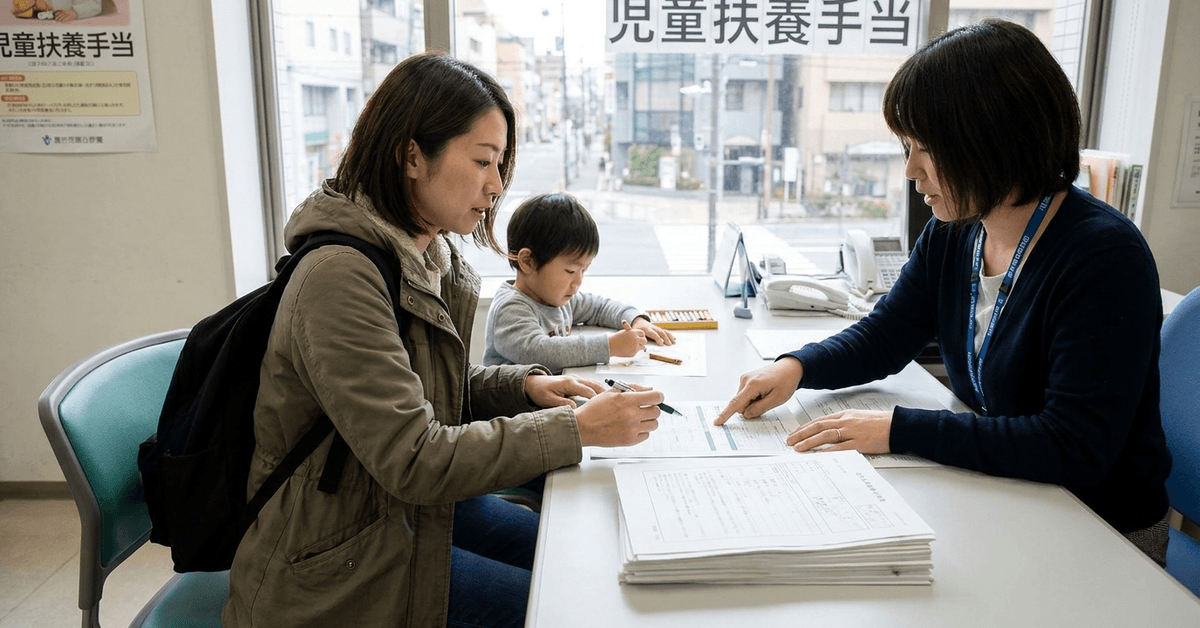
Who Can Apply? Jidou Fuyou Teate Eligibility
Eligibility depends on residence, household relationships, income, and the child’s circumstances. Municipal offices review individual family situations because qualifying conditions differ.
Basic Eligibility Conditions
Applicants must care for an eligible child and meet residence and income rules. The municipality also checks household relationships affecting benefit eligibility.
- The child generally must live in Japan and meet applicable age rules.
- The applicant normally must care for and support the child.
- Qualifying situations can include divorce, death, abandonment, certain domestic violence circumstances, or other legally defined conditions.
- Income limits apply to the applicant and may also involve supporting relatives.
Common Reasons for Denial
Applications can be refused when residency, household, legal, or income conditions are unmet. Applicants should verify uncertain circumstances before assuming automatic eligibility.

- The applicant or child does not meet residence requirements.
- Income exceeds the applicable limit.
- The applicant has remarried or entered a de facto marital relationship.
- The child’s living or support arrangement conflicts with eligibility.
Application Process: Steps to Claim Jidou Fuyou Teate
Applications are handled by the municipality where the applicant lives. Preparing official documents can reduce repeat visits and delays.
Gather Required Documentation
Document lists vary by municipality and family circumstances. Applicants should confirm the checklist and prepare clear supporting records.
- Residence card or other accepted identification
- Bank account details for receiving payments
- My Number information if required
- Provide Koseki (Family Register) documentation when applicable
- Prove Separation/Divorce with evidence requested for the family situation
- Submit Income Certificate records if income cannot be verified automatically
Visit the Local Municipal Office
Most applicants begin at the child or welfare section of the local government office. Visit City Hall with requested documents and explain unusual family circumstances. Staff can identify missing evidence and explain the local submission process.
Waiting Period and Decision
After submission, the municipality checks eligibility, income, residence, and documents. Processing time varies if extra verification is needed. Approved applicants receive a written decision showing the amount and effective period.
How Much Can Be Received?
Payment amounts depend on income and the number of eligible children. From April 2026, the full monthly amount for one child is ¥48,050, plus additions for later children.
Standard Allowance Rates
The current structure includes full and partial awards based on income. These monthly amounts apply from April 2026.
- First child, full payment: ¥48,050
- First child, partial payment: ¥48,040 to ¥11,340
- Each second or subsequent child, full addition: ¥11,350
- Each second or subsequent child, partial addition: ¥11,340 to ¥5,680
Factors That Affect Payment
Calculations can include earnings, deductions, and child-support payments. Municipalities also consider dependents and sometimes income of supporting relatives.
- Applicant income after applicable calculations and deductions
- Number of qualifying children and dependents
- Certain child-support payments from the other parent
- Income of a spouse or specified supporting relatives
Payment Schedule and Ongoing Requirements
The allowance is generally deposited six times yearly. Payments usually cover the previous two months, commonly in January, March, May, July, September, and November, although exact local deposit dates can differ.
Annual Status Reporting
Recipients generally complete an annual status review called a genkyou todoke. Municipalities confirm income, residence, household, and continuing eligibility conditions. Missing it can suspend payments until review.
Tips for Maximizing Your Benefit
Good records and timely reporting can prevent interruptions. Applicants should treat municipal notices and reporting deadlines seriously.
Track Key Dates
Recipients should track reviews, payment months, and deadlines. Missing a deadline can delay continued payments.
- Save the approval notice and application receipt.
- Record annual status-report deadlines.
- Check deposits against the payment schedule.
- Report address, custody, marital, or household changes promptly.
Double-Check Related Welfare Options
Single-parent households may qualify for other support. Checking related family assistance can reveal education, medical, housing, or childcare help.
- Jidou Teate, or general Child Allowance
- Local single-parent medical expense subsidies
- Education or school-related assistance
- Childcare fee reductions where available
Where to Get Reliable Support and Updates?
The municipality is the best source because procedures vary locally, while national rules can also be checked through MHLW and other official government sources.
Multilingual services and community organizations can help explain forms when language barriers make complex application steps harder, but important details should still be verified locally.
Legal and Tax Considerations for Parents
The allowance is administered under Japanese law, and required changes must be reported accurately. Keeping official records helps with later eligibility checks.
Eligibility for Foreign Residents
Eligible foreign residents can apply when they meet residence and program requirements. The applicant and child generally need qualifying residence in Japan. Municipal staff can explain documentation requirements.
Frequently Asked Questions on Jidou Fuyou Teate
Common questions involve nationality, work income, and other benefits. Answers depend on current program rules and circumstances.
Does Part-Time or Freelance Work Affect Eligibility?
Income from part-time, freelance, or other work can affect the allowance calculation. Working does not automatically end eligibility, but higher income may reduce or eliminate payment. Accurate income reporting is therefore essential.
Is This the Same as Other Child Benefits?
No, Jidou Fuyou Teate supports qualifying single-parent and similar households. Jidou Teate is a broader Child Allowance with different rules. Families may receive both benefits when they independently meet each program’s conditions.
Can Non-Japanese Parents Apply?
Yes, eligible foreign residents may apply when residence and family conditions are met. Documentation can differ depending on nationality, family registration, and custody. Confirming local requirements before applying can prevent delays.
Conclusion
Jidou Fuyou Teate can provide important financial support for eligible single-parent households in Japan. Current payments depend on income, household circumstances, and the number of qualifying children.
Preparing documents, reporting changes, and completing annual reviews can help prevent payment interruptions. Local municipal guidance remains the best source for confirming current requirements, checking document rules, and completing an application correctly.