
Council Tax Reduction can lower bills for people on limited incomes. Local rules can make the process feel confusing.
This guide explains eligibility, applications, documents, decisions, and common mistakes. It also covers practical steps for finding your council and keeping support current.


What Is Council Tax Reduction and Who Can Benefit?
Council Tax Reduction, sometimes called Council Tax Support, can reduce the council tax owed by eligible households.
The amount depends on local rules, household circumstances, income, savings, benefits, residency status, and who lives in the home.
Eligibility Requirements Explained
Each local authority runs its own scheme for working-age applicants, while pension-age rules are more nationally prescribed.
Councils commonly consider household income, savings, benefits, children, other adults, and the applicant’s responsibility for the bill. People who work, rent, own their home, or receive benefits may still qualify.
Special Circumstances
Pensioners, disabled people, carers, students, and households with children may face different rules or qualify for other council tax discounts.
A local authority can explain whether additional support applies alongside Council Tax Reduction. Applicants should check both reduction schemes and separate exemptions or discounts.
How the Council Tax Reduction Scheme Works
Council Tax Reduction is administered locally rather than through one national application form. The central aim is to reduce council tax liability for eligible people according to the rules applying where they live.
Means-Tested Assessment
Most schemes assess income, savings, benefits, and household composition before calculating support.
Some councils use savings limits, but working-age thresholds and calculation methods can vary substantially by area. Applicants should avoid assuming that an older national figure applies everywhere.
The Impact on Your Council Tax Bill
An approved claim can reduce part or, in some cases, all of the amount due. The actual reduction depends on local scheme rules and individual circumstances. A revised council tax bill normally shows the new amount after the award is applied.

Applying for Council Tax Reduction: Step-by-Step Process
The application normally starts with the local authority responsible for the applicant’s address. Preparing accurate information before beginning can reduce delays and repeated evidence requests.
Finding Your Local Council
The first step is to Find Local Council Portal information by entering your postcode through the official GOV.UK local council finder.
This directs applicants to the correct authority instead of relying on unofficial forms. Using the council’s own website also helps confirm the current local scheme.
Gathering Necessary Documents
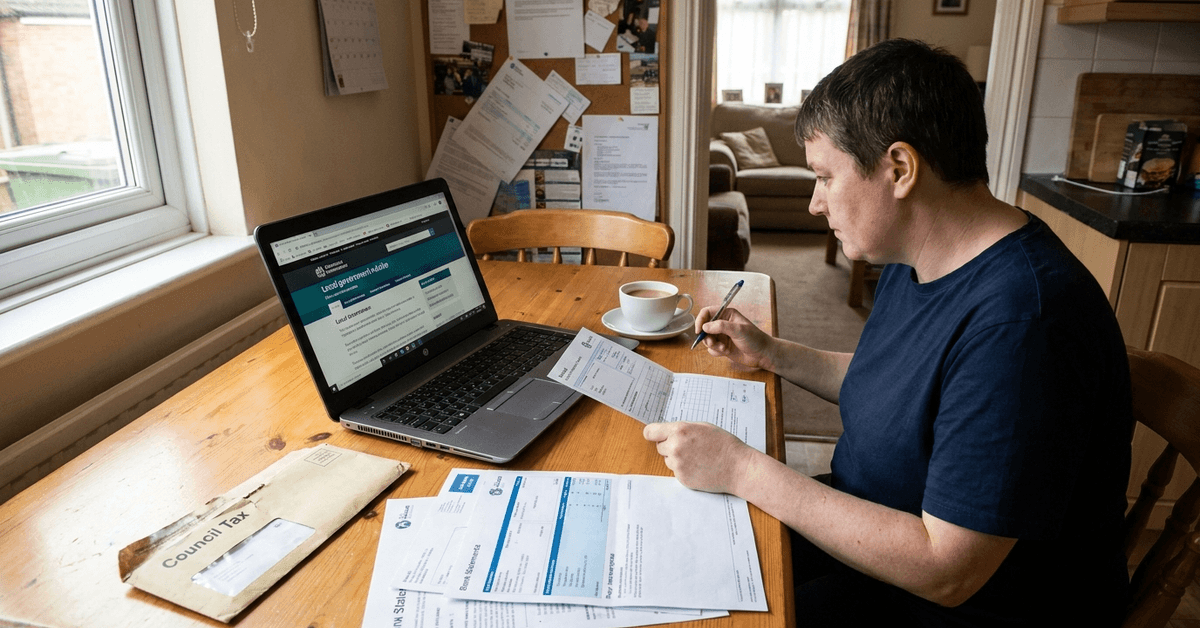
Councils usually request evidence covering identity, income, savings, benefits, and housing circumstances. Applicants should collect current documents before starting so information can be checked against the form.
- Recent payslips, benefit letters, pension details, or other income evidence
- Bank or savings statements showing current capital where requested
- National Insurance number and current council tax account details
- Proof of identity and address accepted by the local authority
- Provide Tenancy Agreement documentation if the council requests evidence of renting or occupancy
- Relevant information about a partner, children, or other adults living in the property
Online vs Paper Applications
Many councils allow applicants to Fill Online Form submissions through a benefits or council tax portal.
Some authorities can provide paper or assisted application routes when online access is difficult. Applicants should use the method offered by their council and keep confirmation of submission.
Providing Accurate Information
Applicants should report earnings, savings, benefits, and household members honestly and consistently. When asked to Declare Household Income, include the information specified by the local scheme, including a partner’s income where relevant. Accurate details reduce the risk of overpayments, delays, or later corrections.
What Happens After You Apply?
The council reviews the claim and may ask for additional evidence before making a decision. Processing times vary, so applicants should follow local updates rather than expect one national timeframe.
If approved, the council usually issues a revised bill, while decision notices explain review or appeal options.
Common Pitfalls and How to Avoid Them
Most delays come from missing evidence, late applications, or unreported changes. Keeping application records and responding promptly can make the process easier.
Incomplete Information
Missing documents can prevent a council from completing its assessment. Applicants should check the evidence list and submit readable records within any stated deadline. If something is unavailable, contacting the council early is better than leaving the request unanswered.
Overlooking Time Limits
Waiting to apply can affect when support begins because backdating rules vary by council and claimant type.
Submitting a claim as soon as possible can protect potential entitlement. Applicants should also note deadlines for supplying evidence or challenging a decision.
Not Informing About Changes
Changes in employment, income, savings, address, relationships, or household members can affect an award.
Recipients should report relevant changes using the method required by their council. Prompt reporting can help prevent incorrect reductions and later repayment demands.
Tips for a Smoother Application
Preparation can reduce avoidable delays and make communication with the council easier. These practical habits are useful before and after submitting a claim.
- Check the local authority’s current eligibility rules before completing the application.
- Gather income, savings, benefit, housing, and identity records in advance.
- Make sure uploaded photographs or scans are complete and readable.
- Save application references, confirmation emails, and copies of submitted evidence.
- Respond quickly when the council requests clarification or additional documents.
- Check your revised council tax bill carefully after a decision.
- Report changes in circumstances promptly rather than waiting for renewal.
- Ask the council about accessible, telephone, or paper options if digital forms are difficult.
- Use a reputable benefits calculator for an initial estimate, while treating the council’s decision as authoritative.
- Contact Citizens Advice or another qualified support service if the process becomes difficult.
Other Support Options to Consider
Council Tax Reduction is not the only help available to households facing financial pressure. Councils may offer local hardship support, while national benefits, discounts, exemptions, or discretionary schemes may also apply.
Eligibility depends on factors such as income, age, disability, housing circumstances, and local rules.
Legal, Privacy, and Decision Considerations
Councils use personal and financial information to assess entitlement under applicable legal and privacy requirements.
Applicants should submit sensitive information through official channels, review privacy notices carefully, and keep copies of decision records, submitted evidence, and correspondence for any reconsideration or formal challenge.
Conclusion
Council Tax Reduction can provide meaningful bill relief for eligible households on low incomes or benefits. Because schemes vary locally, applicants should use official council guidance and provide complete information.
Reporting changes promptly and keeping evidence organized can help protect an accurate award. Checking related discounts and support can also improve overall household finances.