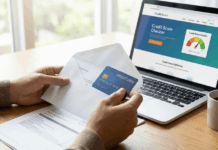
A flat 2% cashback rate on every purchase sounds like a winning formula. PayPal’s Mastercard products push that number hard, and most reviews parrot it without asking the obvious follow-up question.
But the cashback percentage is only half the equation for anyone earning income through PayPal. The other half is what happens to money already sitting inside that PayPal balance.



This review is built for freelancers, gig workers, and online sellers who receive payments into PayPal and wonder whether the PayPal Mastercard solves a problem their regular bank card can’t.
Where the PayPal Mastercard Stops Being a Generic Credit Card
The standard pitch for any cashback card focuses on what percentage comes back when you spend. And at 2% flat, the PayPal Mastercard matches competitors like the Citi Double Cash and Wells Fargo Active Cash. Nothing separates them on that number alone.
The difference hides in the plumbing. A PayPal Mastercard syncs directly to a PayPal balance. Transactions, rewards, and spending all run through the same dashboard.
For someone who checks PayPal twice a day already, that consolidation removes a layer of friction that standalone bank cards never address.
PayPal Balance as a Spending Account
Freelancers on platforms like Upwork, Fiverr, or direct PayPal invoicing land their income inside PayPal. Getting that money into a bank account takes one to three business days for a standard transfer.
The PayPal Mastercard debit version sidesteps that fee entirely. Earnings become spendable at any Mastercard-accepting retailer without moving funds to a bank first. I would argue that for a freelancer processing $3,000 per month through PayPal, the 1.75% instant transfer fee adds up to roughly $52.50 monthly.
That $52.50 monthly saving dwarfs the cashback math. A 2% reward on $3,000 in spending is $60. Combine the two, and the effective return on using PayPal’s card instead of transferring and spending through a bank card gets closer to 3.75% in total value each month.
Why This Math Disappears for Non-PayPal Earners
Someone who earns a regular salary deposited into a checking account gains nothing from the PayPal integration.
The 2% cashback stands alone, and it faces stiff competition from cards that offer rotating 5% categories, sign-up bonuses worth $200 or more, or better purchase protections.
The PayPal Mastercard carries no annual fee for most variants, which keeps it competitive on cost. But without PayPal income flowing through the account, the card loses its edge.
Rewards Redemption and How PayPal Handles Cashback
Cashback cards live and die on redemption flexibility. A 2% return means little if the points sit locked behind restrictive options.
PayPal keeps redemption simple. Earned cashback drops directly into a PayPal balance, applies as a statement credit, or goes toward purchases at partner retailers.
No points conversion charts, no tiered redemption where the first 25,000 points are worth less per dollar. One percent equals one cent across the board.
Seasonal Promotions and Partner Deals
PayPal occasionally runs limited-time offers through its dashboard: extra cashback percentages at specific merchants, partner discounts on travel bookings, or bonus earning events. These shift regularly and depend on shopping habits.
I’d keep expectations modest here. Seasonal promotions on the PayPal Mastercard tend to run 1% to 3% above the base rate for short windows, and they require opting in through the app.
Still, the opt-in model means checking the PayPal dashboard monthly becomes a small habit worth building. Missing an active promotion on a purchase category already in a monthly budget is free money left behind.
| Feature | PayPal Mastercard | Typical Bank Cashback Card |
|---|---|---|
| Annual Fee | $0 for most variants | $0 to $100+ |
| Base Reward Rate | 2% flat | 1% to 5% (often category-rotating) |
| Redemption | PayPal balance, statement credit | Statement credit, direct deposit, gift cards |
| Virtual Card | Available instantly after approval | Occasionally offered |
| PayPal Sync | Direct, real-time | None |
| Foreign Transaction Fee | Varies by card variant | Varies (often 3%) |
The takeaway: the PayPal Mastercard wins on simplicity and integration, but loses on ceiling. Category-based cards can return more for disciplined spenders who track rotating bonuses.
The Application Process Through PayPal’s Dashboard
Applying happens entirely inside a PayPal account, which cuts out the usual third-party bank application maze.
The steps look like this:
- Log into PayPal and find the card application under the Finances or Wallet tab
- Choose between the credit or debit Mastercard variant
- Submit personal and financial details (credit check required for the credit version)
- Review the fee schedule and terms before confirming
Approval decisions come back within minutes for most applicants. An approved credit card generates a virtual card number immediately, usable for online purchases while the physical card ships. The debit version follows a similar pattern.
One common mistake: applying for the credit version without checking the starting credit limit expectations. Several applicants report modest initial limits compared to cards from larger banks like Chase or Capital One.
A $1,500 starting line is not unusual, even for applicants with good credit scores. For freelancers expecting to run business expenses through the card, that ceiling can feel tight in month one.
Who the PayPal Mastercard Fits (and Who It Quietly Fails)
The card works well for a specific kind of user. Knowing where the fit breaks down saves time and potential frustration.
Online Sellers and Marketplace Freelancers
eBay sellers, Etsy shop owners, and PayPal invoice users get the most out of this card. Earnings land in PayPal, spending happens from PayPal, and cashback returns to PayPal. The loop stays closed, and no transfer fees interrupt the cycle.
I think the PayPal Mastercard debit card is a stronger pick than the credit version for sellers doing under $5,000 monthly in PayPal volume. The transfer fee savings alone justify carrying it, and the debit version skips the credit check entirely.
International Freelancers and Remote Workers
Mastercard acceptance spans most countries, and the PayPal integration can simplify cross-border payments.
But a caution: foreign transaction fees still apply on certain PayPal Mastercard variants, and PayPal’s own currency conversion spread adds cost on top. A freelancer billing in USD but spending in EUR may find the combined conversion cost eating into the cashback earned.
Checking the specific fee schedule on PayPal’s card terms page matters here. Some variants charge 2.5% to 3% on foreign transactions, which wipes out the 2% cashback entirely on international purchases.
Traditional Salary Earners
Someone paid via direct deposit into a bank checking account, who uses PayPal only for occasional online purchases, gets almost no integration benefit.
The 2% cashback still applies, but competing cards like the Citi Double Cash offer the same rate within a broader banking ecosystem.
Airport lounge access, extended warranties, travel insurance: these perks exist on mid-tier cards from traditional issuers and are absent from PayPal’s lineup.
Security and Dispute Handling on PayPal Mastercard
PayPal’s consumer protection reputation carries over to its card products. Real-time transaction alerts, zero liability for unauthorized charges, and chip-enabled contactless payments are all standard.
The dispute resolution process runs through PayPal’s existing system, which most users already know from buyer protection claims.
Filing a dispute on a card transaction follows a similar flow to disputing a PayPal payment: open a case, provide documentation, wait for review. Response times vary, but the interface is familiar for existing PayPal users.
A few practical security habits make a difference:
- Turn on push notifications for every transaction, not just large ones
- Update PayPal login credentials and security questions on a quarterly schedule
- Keep a backup payment method linked in case the card is temporarily frozen during a dispute
- Review monthly statements line by line, even if alerts seem to cover everything
Fraud monitoring runs in the background and flags unusual activity. But automated flags miss small recurring charges from forgotten subscriptions or trial periods that converted to paid. Manual review catches what automation misses.
Questions People Ask About PayPal Mastercard
These come up repeatedly in search results and forums, and some answers go beyond the surface.
- Q: Does the PayPal Mastercard work without a PayPal balance?
The credit version works like any standard credit card, drawing from a credit line regardless of PayPal balance. The debit version pulls from a linked PayPal balance or connected bank account. Having $0 in PayPal does not block the credit card from functioning. - Q: Can I use the PayPal Mastercard for business expenses?
Technically yes, and many freelancers do. But PayPal’s card terms categorize it as a personal financial product. Separating business transactions through a dedicated business account and card simplifies tax reporting and protects personal liability. - Q: Is the PayPal Mastercard available outside the United States?
Availability varies by region and card variant. The core cashback credit card targets U.S. residents, though PayPal debit products exist in several other markets. Checking PayPal’s country-specific site confirms current availability. - Q: How long does the physical PayPal Mastercard take to arrive?
Standard delivery runs seven to ten business days after approval. The virtual card number, available immediately after approval, covers online purchases during the wait. No expedited shipping option is widely advertised. - Q: Does PayPal charge an annual fee on any Mastercard variant?
Most PayPal Mastercard products carry no annual fee. Cash advance fees, late payment fees, and foreign transaction fees still apply depending on the specific card version. Reading the fee schedule during the application review step is the only way to confirm current charges.
Conclusion
The PayPal Mastercard earns its spot for freelancers and online sellers already living inside PayPal’s ecosystem. A flat 2% cashback rate is competitive but unremarkable on its own in 2026.
The real savings come from avoiding instant transfer fees, and that advantage belongs to a specific kind of earner. Traditional salary earners and heavy travelers can find better value elsewhere without much searching.