
Amazon Flex has become an appealing side hustle for those seeking flexible, on-demand work in cities across the US, UK, and beyond.
This guide reviews the essentials, offers best practices, and pinpoints useful tools for drivers considering Amazon Flex delivery jobs.


What Is Amazon Flex and How Does It Work?
Amazon Flex is a gig economy program where individuals use their own vehicles to deliver Amazon packages.
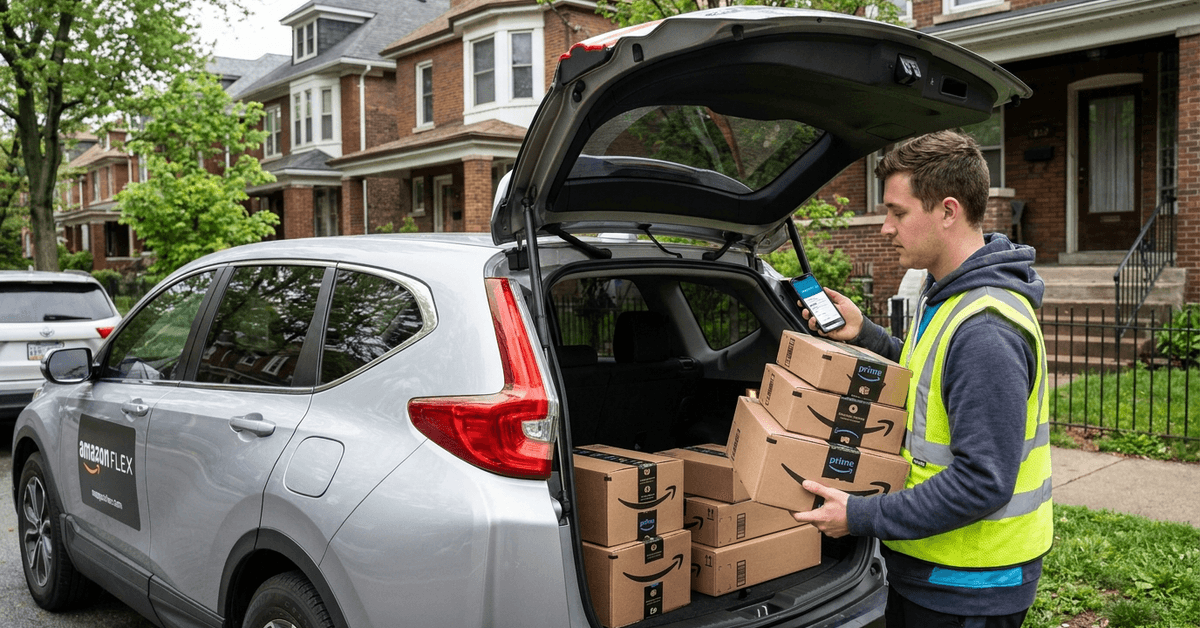
Drivers accept shifts, called “blocks,” through an app and deliver packages to customers in their local area.
The program serves major cities such as New York, Los Angeles, London, Chicago, and Berlin.
How Delivery Blocks Operate
- Drivers select open blocks on the Amazon Flex app detailing the date, time, and estimated earnings.
- Most blocks last 3-4 hours, covering dozens of deliveries depending on area density.
- Blocks appear in real-time and fill up quickly, especially in high-demand zones.
Vehicle Choices
Any midsize car, van, or SUV usually fits program requirements.
Larger vehicles might be helpful for Amazon Fresh or Prime Now orders, which sometimes include bulky grocery items.
How to Sign Up and Get Started
The application process for Amazon Flex is mostly app-based and straightforward.
The requirements may vary slightly by country or city, so checking local eligibility is important.
Eligibility Criteria
Eligibility criteria help applicants understand the basic age, licence, vehicle, insurance, and account requirements needed before starting the application process.
- Applicant must be at least 21 years old for most US cities.
- A valid driver’s license from the country of operation is required.
- Social Security Number (US) or National Insurance Number (UK) is necessary for background checks.
Application Steps
The application process typically involves creating an account, submitting personal and vehicle information, completing required checks, and waiting for approval.
- Download the Amazon Flex app from Google Play or Apple’s App Store.
- Create a new account, upload necessary identification, and enter banking info.
- Select your preferred city and vehicle type.
- Complete the background check (can take several days).
- Review Amazon’s online training videos and answer quiz questions.
- Wait for acceptance, which can vary by location and demand.
Top Cities for Amazon Flex
Popular urban centers like San Francisco, Manchester, Houston, and Sydney see the most frequent block availability and higher earnings potential.
Smaller cities often have less competition, but fewer open shifts.
How Much Can Amazon Flex Drivers Earn?
Earnings can fluctuate based on geography, number of packages per block, and time of year.
Most drivers report hourly rates ranging from $18 to $25 in US markets.
Key Earnings Factors
- Peak Season Bonuses, such as during holidays or promotions
- Tips (Primarily available for Prime Now, Fresh, and Whole Foods deliveries)
- Number of successfully completed blocks per week
Earnings are paid via direct deposit twice per week in most countries.
Essential Tools and Apps for Amazon Flex Drivers
Efficient route planning and package management improve both speed and customer satisfaction.
While Amazon Flex offers a built-in GPS, many drivers leverage third-party apps for better navigation in dense areas.
Navigation and Route Optimization
Effective navigation and route optimization can help drivers reduce travel time, save fuel, avoid delays, and complete deliveries more efficiently.
- Google Maps for reliable turn-by-turn directions and live traffic updates
- Waze for community-reported hazards and time-saving alternate routes
- Maps.me for offline navigation in areas with spotty coverage
Delivery Management
Effective delivery management helps drivers organize packages, follow instructions, track completed stops, and handle issues without disrupting the route.
- Gridwise: Monitors mileage, earnings, and compares gig performance across app-based jobs
- Stride: Helps log miles for tax deduction purposes and tracks expenses
Time and Fuel Saving Apps
Time and fuel-saving apps can help drivers plan efficient routes, monitor traffic, reduce unnecessary mileage, and manage delivery schedules more effectively.
- GasBuddy to find the lowest fuel prices in real time
- Flush or similar apps for locating public bathrooms between stops
Challenges Faced by Amazon Flex Drivers
While driving for Amazon Flex offers independence, there are notable challenges every driver should know.
Parking Issues and Fines
Park legally to avoid city fines, even if it means walking further to customer doors.
Downtown areas like New York City, Chicago’s Loop, or Central London are especially difficult for quick stops.
Package Organization
Using simple sorting bins or tote bags can prevent mix-ups or time wasted when searching for parcels inside your vehicle.
Some drivers label bags with stop numbers to speed up drop-offs during multi-package routes.
Peak-Hour Traffic and Delivery Windows
Scheduling blocks outside rush hours can often save time and reduce stress.
Weekday lunchtime or mid-morning routes tend to move faster in most cities compared to after-work blocks.
Tips for Maximizing Efficiency and Earnings
Working efficiently can help Amazon Flex drivers complete deliveries on time, reduce operating costs, and make better use of each scheduled block. Careful planning, vehicle maintenance, and strong customer service can all support more consistent results.
Use Smart Block-Selection Strategies
Check the Amazon Flex app regularly for newly available delivery blocks, particularly during early mornings and near the start of each hour. Last-minute opportunities may also appear when other drivers cancel their scheduled blocks.
Enable app notifications so you can respond quickly when suitable delivery times become available. However, review the block location, estimated duration, and travel distance before accepting.
Plan Delivery Routes Carefully
Review the delivery order in the Flex app before leaving the distribution hub. Understanding the route in advance can help you identify apartment buildings, restricted areas, and stops that may require extra time.
When possible, organize packages by delivery order and group nearby stops. This can reduce searching time, unnecessary driving, and fuel use.
Maintain an Organized Vehicle
Schedule regular checks for tires, oil, brakes, lights, and other essential vehicle components. Preventive maintenance can reduce the risk of delays and costly repairs.
Keep the trunk and cargo area clean and organized. Arrange parcels by route section or stop number so each package is easier to locate.
Support Customer Satisfaction
Follow all delivery instructions listed in the app, including access codes, identification checks, and preferred safe locations. Take clear delivery photos when required, especially at apartment buildings or shared residences.
Report access problems, damaged parcels, or safety concerns through Amazon Support rather than leaving packages in unsuitable locations.
Legal, Safety, and Tax Considerations
Following local laws, insurance rules, tax requirements, and safety procedures can help protect your income and reduce the risk of penalties while working as a delivery driver.
Insurance Requirements
Standard personal auto insurance may not fully cover accidents that occur while completing paid deliveries. Some cities or insurance providers require drivers to purchase commercial coverage or disclose that the vehicle is being used for gig work.
Requirements can vary by location, including cities such as Toronto, Los Angeles, and Hamburg. Drivers should review local regulations and confirm coverage directly with their insurer before accepting delivery blocks.
Conclusion
Amazon Flex presents an opportunity for flexible, relatively well-paid self-employment with low barriers to entry.
Success depends on smart app use, knowledge of peak times, and staying organized on the road. Practical use of navigation tools, an understanding of legal basics, plus proactive customer service can help maximize earnings and avoid problems.
Though the work is not for everyone, many drivers in cities worldwide have found this path suits their schedules, goals, and lifestyle. Perhaps, with a bit of practice and planning, it could suit yours as well.