Public housing, or Kōei Jūtaku, offers lower-cost rentals for eligible households across Japan. Applications often involve income checks and selection.
This guide explains eligibility, lotteries, documents, applications, and tenant responsibilities. It also covers practical preparation for municipal housing.



Why Public Housing (Kōei Jūtaku) Attracts Residents in Japan?
Public housing can help households facing high private rents or needing stable accommodation. Local governments operate these homes under income-based rules that vary locally.
Affordable Rent Compared to Market Alternatives
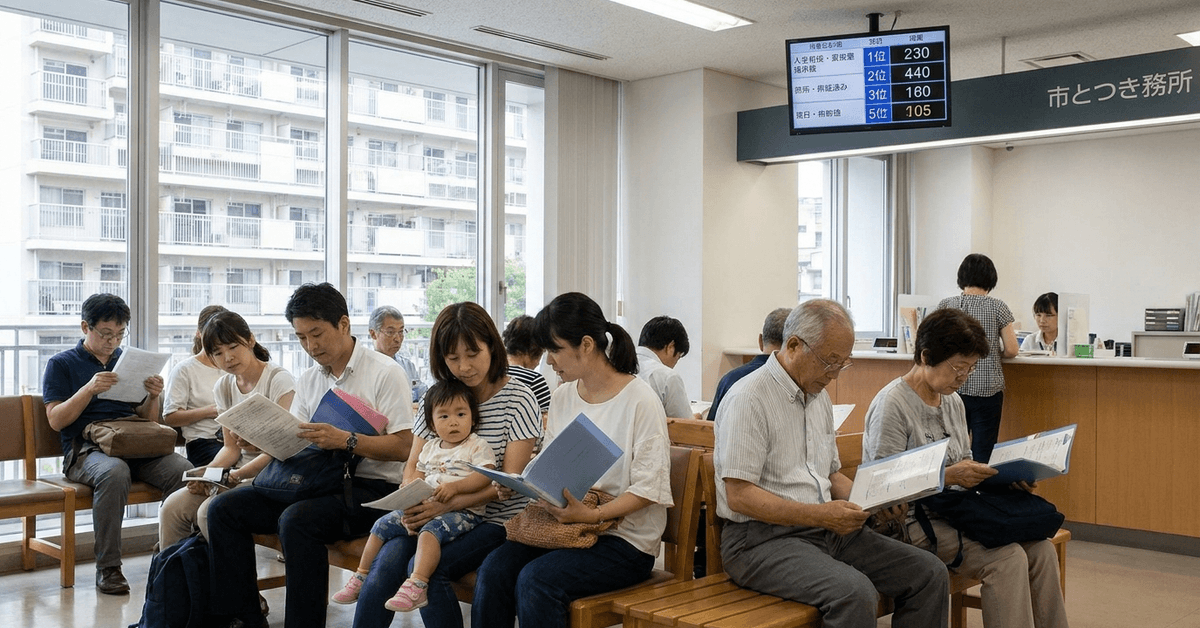
Public-housing rent is generally calculated using household income, unit size, location, and official factors. This can make monthly housing costs more manageable than comparable private rentals. Savings vary, so applicants should compare listed rent with local options.
Stable Tenure and Community Environment
Public housing can provide structured tenancy for residents who continue meeting requirements. Residents follow building rules on maintenance, noise, waste disposal, and shared areas. Community life varies, but shared spaces are common in many developments.
Supportive Framework for Families and Vulnerable Groups
Some programs include priority categories for seniors, people with disabilities, single-parent households, and families with children.
Eligibility and priority rules are locally determined, so municipalities may use different criteria. Official notices explain special consideration for each round.
What Is the Public Housing Lottery System?
Many municipalities use lotteries when eligible applications exceed available apartments. Other systems include point-based selection, waiting lists, monthly recruitment, or first-come procedures.
Application Rounds and Notification Timelines
Application periods depend on municipality and housing type, with no single national schedule. Tokyo metropolitan housing uses regular lotteries and other recruitment methods. Applicants should check application period notices because late submissions are normally excluded.
Who Is Eligible to Apply?
Eligibility usually considers residence, housing need, household composition, income, and category-specific rules. Foreign residents may qualify with an accepted status while meeting the same housing conditions.
- Live in the municipality or prefecture as required by the specific program
- Meet the household or single-person conditions for the advertised unit
- Fall within the applicable income ceiling and prove low income when requested
- Demonstrate a genuine need for housing under the authority’s rules
- Meet residence-status requirements if applying as a foreign national
- Satisfy any additional rules for priority or special-category housing
How to Apply for the Public Housing Lottery: Step-By-Step Guide
The application route depends on the local authority, but the basic process is similar. Careful document preparation can prevent rejection before selection.
Step 1: Check Application Windows and Vacancy Notices
Start with the municipal, prefectural, or housing-corporation website for your target area. Notices list units, household requirements, rents, deadlines, and selection methods. Reminders can prevent missing short recruitment windows.
Step 2: Collect and Fill Out Application Forms
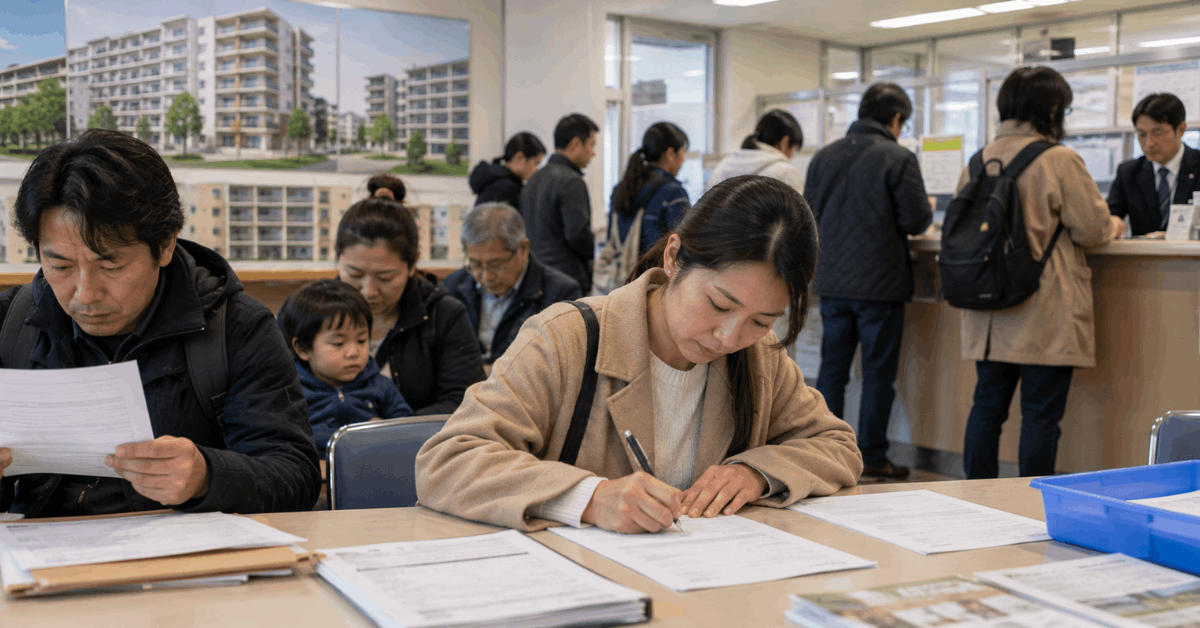
Application forms usually request names, household members, address history, income, employment, and current housing information.
Some authorities accept online applications, while others also use postal or in-person submission. If the local instructions direct you to apply at Municipal Housing Corp offices, follow the stated method exactly.
Step 3: Submit Accompanying Documentation
Applicants may need residence certificates, income or tax documents, identification, and residence cards for foreign household members.
Documents must usually be current and consistent with the information entered on the application. Missing or outdated records can delay eligibility review or invalidate the submission.
Step 4: Entering the Lottery Draw
After the authority confirms that an application was received within the correct period, eligible applicants may enter lottery selection for the advertised units.
Some programs publish draw numbers and results online, while others send written notices. Applicants who are not selected may need to apply again in a later round.
Step 5: Attend Interviews or Provide Additional Details
Being selected in a lottery does not always mean the tenancy is immediately final. The authority may conduct a detailed eligibility review and ask for updated income, residence, family, or housing records. Applicants must satisfy all requirements before a unit can be formally offered.
Tips for Improving Your Chances in the Public Housing Lottery
A lottery itself is random, so no strategy can guarantee selection. Applicants can still improve their overall prospects by avoiding preventable errors and applying flexibly.
Apply Across Multiple Waiting Periods
Repeated applications are common when demand exceeds available supply. Applying in several eligible rounds can create more opportunities over time. Keep documents organized so each new application can be prepared efficiently.
Widen Your Search Criteria
Limiting applications to one popular building, station, or neighborhood can reduce available options. Considering nearby areas, older buildings, or different layouts may increase the number of eligible vacancies you can pursue. Always confirm that transport, accessibility, and household needs remain practical.
Keep All Required Documents Current
Income certificates, residence records, tax documents, and residence cards may have validity requirements.
Review the checklist before every application rather than assuming previously used documents are still accepted. A simple document tracker can help prevent last-minute problems.
Stay Updated Through Municipal Communications
Recruitment schedules, vacancy lists, and eligibility rules can change. Check local-government pages and housing-corporation announcements regularly for special recruitment rounds or updated procedures.
In Tokyo, JKK Tokyo provides official information connected with metropolitan housing recruitment and related services.
Legal, Tax, and Compliance Considerations
Public-housing applicants and tenants must provide truthful information and comply with the conditions attached to their tenancy. Income, household composition, residence status, and continued housing need may be reviewed after move-in.
Reporting Accurate Income and Family Status
Applicants should report income and household members exactly as required by the housing authority. False statements or omitted information can lead to rejection, cancellation, or later tenancy problems. Keep supporting records so changes can be explained clearly.
Annual Income Review and Rent Adjustments
Public-housing rent can be reviewed periodically because household income affects the amount charged. A rise or fall in earnings may change future rent calculations according to local rules. Tenants should submit requested income declarations by the deadline.
Adherence to Building Rules and Community Life
Residents must follow rules covering noise, waste disposal, shared spaces, alterations, pets where restricted, and general property care.
These obligations help maintain safe communal living for everyone in the development. Repeated violations can create disputes or administrative consequences.
Conclusion
Public housing can offer more affordable rent and greater stability for eligible households in Japan. Successful applications depend on local eligibility rules, complete documents, and participation in the correct selection process.
Applicants should monitor official recruitment notices, prepare evidence early, and understand that selection may require repeated attempts. Local housing authorities remain the best source for current vacancies, income limits, lottery dates, and tenancy requirements for each specific application round in Japan.