
The PayPal Cashback Mastercard used to pay 2% cash back on all purchases. Then Synchrony Bank dropped that rate to 1.5% in August 2024. That single change reshaped who this card is for.
Most reviews still describe the card as a simple, no-fuss cashback pick. They skip past the rate cut and treat 1.5% like a competitive number. It was competitive two years ago. Now it sits below the Citi Double Cash at 2%.


This review is for freelancers, eBay sellers, and anyone who already runs a chunk of their financial life through PayPal. If PayPal checkout is part of your weekly routine, the math still works. If it’s not, you need different numbers.
The August 2024 Rate Cut Changed Everything
The old version of this card was easy to recommend. A flat 2% back on every purchase, no categories to track, no annual fee. That combination put it shoulder-to-shoulder with the Citi Double Cash and ahead of most single-rate cards on the market.
Synchrony Bank, which issues the card, lowered the flat cash back rate from 2% to 1.5% on regular purchases in August 2024. New applicants got the lower rate immediately. Existing cardholders saw the change take effect by August 1.
Why 0.5% Matters More Than It Sounds
Half a percentage point sounds trivial until you run annual spending through it.
Based on an estimated annual spending budget of $22,126 across groceries, gas, dining, travel, utilities, and general purchases, a cardholder would earn about $442 in cash back in the first year at the old rates.
At 1.5%, that same spending profile returns roughly $332. Over five years, the gap is around $550 in lost rewards.
That $550 won’t ruin anyone’s finances. But it shifts the card from “competitive everywhere” to “competitive only at the 3% tier.” And the 3% tier requires a specific checkout habit.
How the 3% PayPal Cashback Rate Works (And Where It Doesn’t)
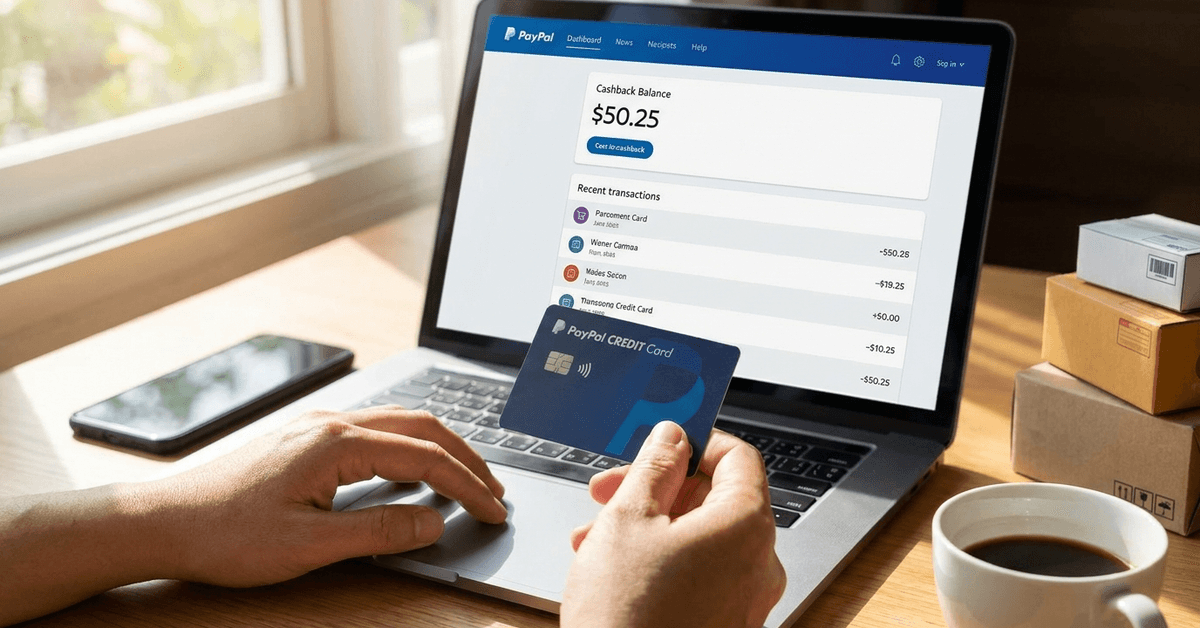
The 3% cash back tier kicks in whenever a purchase goes through PayPal’s checkout system. That can happen online or in-store at retailers that accept PayPal as a payment method.
Major brands like Best Buy, eBay, and Etsy accept PayPal, along with a growing list of fashion, travel, entertainment, electronics, and athletic retailers.
The Checkout Habit That Decides the Card’s Value
Swiping the physical card at a terminal or entering the card number directly on a retailer’s website earns 1.5%. Only transactions processed through PayPal’s payment flow earn 3%.
So the question isn’t “where do I shop?” but “does that store let me check out with PayPal?” Not every online retailer does. Amazon, for example, doesn’t accept PayPal at checkout.
Target and Walmart’s online stores have limited PayPal support depending on how you structure the transaction. So the 3% tier has a real ceiling that depends on your personal shopping habits.
The Peer-to-Peer Trick Nobody Mentions
Sending money to other PayPal users through your PayPal account using this card counts as a purchase, not a cash advance. That means those transactions earn 3% cash back.
If you regularly split rent, pay a contractor, or reimburse friends through PayPal, those transfers generate rewards at the top tier.
I’d argue this single mechanic makes the card worth holding for anyone who moves $500 or more per month through PayPal person-to-person transfers. A $6,000 annual volume at 3% produces $180 in rewards from transactions that most cards would charge a cash advance fee for.
Fees and APR: The Numbers That Punish Careless Use
The card has no annual fee, which makes it painless to keep in a wallet even if usage drops to a few transactions per month. But two fee categories deserve a closer look.
The variable purchase APR ranges from 19.24% to 33.99%. That upper end is steep. Carrying even a moderate balance at 33.99% would wipe out any cashback earned many times over.
A $3,000 carried balance at that rate generates about $85 in monthly interest charges.
Here are the fees that tend to catch cardholders off guard:
- Foreign transaction fee: 3% of each transaction. This card should stay home during international trips. A $2,000 vacation abroad costs an extra $60 in fees alone.
- Late payment fee: up to $41. One missed payment can eat several months of accumulated cashback.
- Cash advance fee: $10 or 5%, whichever is greater. Standard for the industry, but expensive enough to avoid.
There is no balance transfer option and no introductory 0% APR offer. The card doesn’t pretend to be a debt consolidation tool, and that’s honest at least.
PayPal Cashback Mastercard vs. Competing Flat-Rate Cards
The card’s real competition is other no-annual-fee, no-category cards. Three sit closest:
| Feature | PayPal Cashback Mastercard | Citi Double Cash | Chase Freedom Unlimited |
|---|---|---|---|
| Base cash back rate | 1.5% | 2% (1% on purchase + 1% on payment) | 1.5% |
| Bonus categories | 3% on PayPal purchases | None | 5% Chase Travel, 3% dining and drugstore |
| Annual fee | $0 | $0 | $0 |
| Foreign transaction fee | 3% | 3% | 3% |
| Sign-up bonus | None | None | Yes (varies by offer period) |
| Intro APR | None | 0% for 18 months on balance transfers | 0% for 15 months on purchases and balance transfers |
The Citi Double Cash earns more on baseline spending. The Chase Freedom Unlimited earns more across dining, drugstores, and travel. The PayPal card only wins when purchases go through PayPal checkout at 3%.
My take on the popular advice that the PayPal Cashback Mastercard is a great everyday card: I’d push back on that after the August 2024 rate cut from 2% to 1.5%. At 1.5% as a floor rate, this card is a specialty tool for PayPal-heavy spenders, not a general-purpose cashback card.
Calling it a great everyday card ignores that both the Citi Double Cash at 2% and the Chase Freedom Unlimited with its category bonuses outperform it on non-PayPal spending.
The PayPal card earns its spot only when the 3% tier carries a meaningful share of your monthly volume.
Who Should Apply and Who Should Skip It
The card is issued by Synchrony Bank under the Mastercard network. An active, verified PayPal account is required before applying.
Credit Score and Approval Odds
The average credit score among matched cardholders on Credit Karma is 689, with 763 being the most common score. PayPal generally recommends a FICO score of 670 or higher for reasonable approval odds.
Approval comes from Synchrony, not PayPal, so existing PayPal history doesn’t directly influence the credit decision.
The average credit limit among cardholders is $7,046, with $2,000 being the most common starting limit. That $2,000 floor is worth noting if you plan to funnel heavy spending through the card. A low initial limit can cap your 3% earning potential.
The Right Cardholder Profile
This card makes sense for a specific type of spender:
- eBay sellers or Etsy merchants who receive PayPal payments and also make business purchases through PayPal checkout
- Freelancers paid through PayPal who want their cashback rewards deposited in the same account their income lands in
- Online shoppers who already select PayPal at checkout on at least 40-50% of their purchases
The wrong fit is someone who shops primarily in physical stores, travels internationally, or wants a card that doubles as a balance transfer tool. For general brick-and-mortar spending, the 1.5% return falls behind too many competitors.
Redeeming Cashback: No Minimum, No Hoops
There is no minimum redemption amount. Cashback can be redeemed at any time for any amount. Rewards deposit directly into your PayPal balance, where they can be spent, sent to a bank account, or transferred to a linked debit card.
The lack of a minimum threshold is a small but real advantage. Some competing cards require $25 or more in accumulated rewards before you can cash out. The PayPal card lets you pull $0.50 if that’s what you’ve earned. That flexibility makes more difference for light spenders than heavy ones, but it removes one friction point from the redemption process.
One catch to watch: if your PayPal account is closed for any reason, or if your card account is no longer linked to your PayPal account, the card account gets closed and any unredeemed cash rewards are forfeited. So redeeming regularly rather than letting rewards pile up is the safer habit.
A Practical Strategy for Getting the Most Out of This Card
The PayPal Cashback Mastercard works best as a second card paired with a higher-base-rate option according to the Consumer Financial Protection Bureau’s guidance on managing multiple credit cards.
Route all PayPal-eligible purchases through this card at 3%. Route everything else through a flat 2% card like the Citi Double Cash. That two-card setup captures the best rate available on every transaction without requiring category tracking or quarterly activations.
Enable PayPal purchase alerts so charges show up in real time. Review statements monthly for any transaction that should have earned 3% but posted at 1.5%. Errors happen, and a quick call to Synchrony can correct them.
Questions People Ask About the PayPal Cashback Mastercard
A few of the searches that come up most often about this card, answered without the usual runaround.
- Q: Does the PayPal Cashback Mastercard have a sign-up bonus? No. The card has never carried a traditional welcome bonus. This is unusual for a cashback card in 2026, and it means the card needs to earn its keep on ongoing rewards alone rather than a one-time bump.
- Q: Can I use the PayPal Cashback Mastercard internationally? Technically yes, but the 3% foreign transaction fee makes every overseas purchase cost more than the cashback earned on it. A card with no foreign transaction fee is a better pick for any travel outside the U.S.
- Q: Is PayPal Credit the same as the PayPal Cashback Mastercard? No. PayPal Credit is a separate line of credit that functions more like a buy-now-pay-later product. The Cashback Mastercard is a standard credit card issued by Synchrony Bank with a Mastercard network logo and traditional billing cycles.
- Q: What happens to my cashback if I close my PayPal account? All unredeemed rewards are forfeited the moment your PayPal account closes or becomes unlinked from the card. Redeem cashback regularly rather than stockpiling it to avoid losing anything.
- Q: Does applying for the PayPal Cashback Mastercard affect my credit score? Synchrony Bank performs a hard credit inquiry when processing applications. That pull typically reduces a credit score by a few points temporarily. There is no soft-pull prequalification option available for this card.
Conclusion
The PayPal Cashback Mastercard earns its place through one specific mechanic: 3% on PayPal purchases. That rate cut from 2% to 1.5% on regular spending made this a niche card, not a general one.
Freelancers and online sellers who already live inside PayPal’s ecosystem will squeeze real value from it. Everyone else should pair it with a stronger everyday card or skip it entirely.